Table of Contents
A nonprofit website has a harder job than most
A commercial website has one primary conversion goal. Sell something or generate an inquiry. A nonprofit website has to do several things at once. Communicate the mission clearly enough that a stranger understands why it matters. Build enough trust that a visitor considers donating. Recruit volunteers, engage members, educate the public, attract partners, and serve the people the organization exists to help. Sometimes all on the same homepage.
That complexity is what makes nonprofit website design genuinely difficult. The organizations that navigate it well end up with sites that advance the mission in measurable ways. The ones that do not end up with sites that launched on time and then quietly stopped working for anyone.
This post covers what separates a nonprofit site that serves its mission from one that just checks the launch box, and what organizations should prioritize before they build or rebuild.
What a Nonprofit Website Needs to Do
Communicate the Mission Immediately
The first question a visitor to a nonprofit site is asking is whether this organization is doing something worth paying attention to. The answer to that question needs to be on the homepage, above the fold, in plain language that does not require background knowledge to understand.
Mission statements that read as internal documents rather than public communication fail this test. A visitor who cannot understand what the organization does and why it matters within the first few seconds will leave before they get to the donate button.
The most effective nonprofit homepage copy states the problem, names the work being done to address it, and gives the visitor a reason to keep reading. That sequence is not complicated but it requires writing with a real audience in mind rather than an internal approval committee.
Build Trust Quickly
Donors are being asked to give money to an organization they may have just discovered. Volunteers are being asked to give their time. Both of those decisions require trust and trust requires evidence.
That evidence lives in the content. Impact numbers that are specific and recent. Stories about people the organization has helped. Partnerships with recognizable organizations. Staff and board members identified by name. A clear explanation of how donations are used.
A nonprofit website that leads with the organization’s history and founding story before establishing what it does and what impact it has made is optimizing for the wrong audience. Visitors need a reason to care before they will invest in the backstory.
Make Donating Easy
The donation path needs to be short, clear, and functional on every device. A donate button that is hard to find, a donation form that breaks on mobile, or a checkout process that asks for more information than necessary all introduce friction at the moment a visitor is most ready to act.
Recurring donation options, suggested gift amounts, and clear statements about how funds are used all support the conversion. Complexity and confusion work against it.
Serve Multiple Audiences Without Confusing Any of ThemNonprofit websites often need to serve donors, volunteers, program participants, media contacts, and partner organizations simultaneously. That diversity of audiences creates a navigation challenge that commercial sites rarely face.The solution is not to build a separate section for every audience but to design a clear primary path for the most important conversion while making secondary paths findable without cluttering the main experience. A well-structured navigation and a thoughtful homepage hierarchy can serve multiple audiences without making any of them feel like an afterthought.
Where Most Nonprofit Sites Fall Short
Prioritizing Internal Audiences Over External Ones
The most common problem in nonprofit website design is a site built to satisfy the board and staff rather than to serve donors and program participants. Internal jargon, acronyms that are obvious inside the organization and opaque to everyone else, and content organized around the org chart rather than the visitor’s needs.
The organization knows its own work intimately. Visitors do not. Writing for the internal audience produces copy that feels self-referential and assumes a level of familiarity that first-time visitors do not have.
Weak Visual Identity
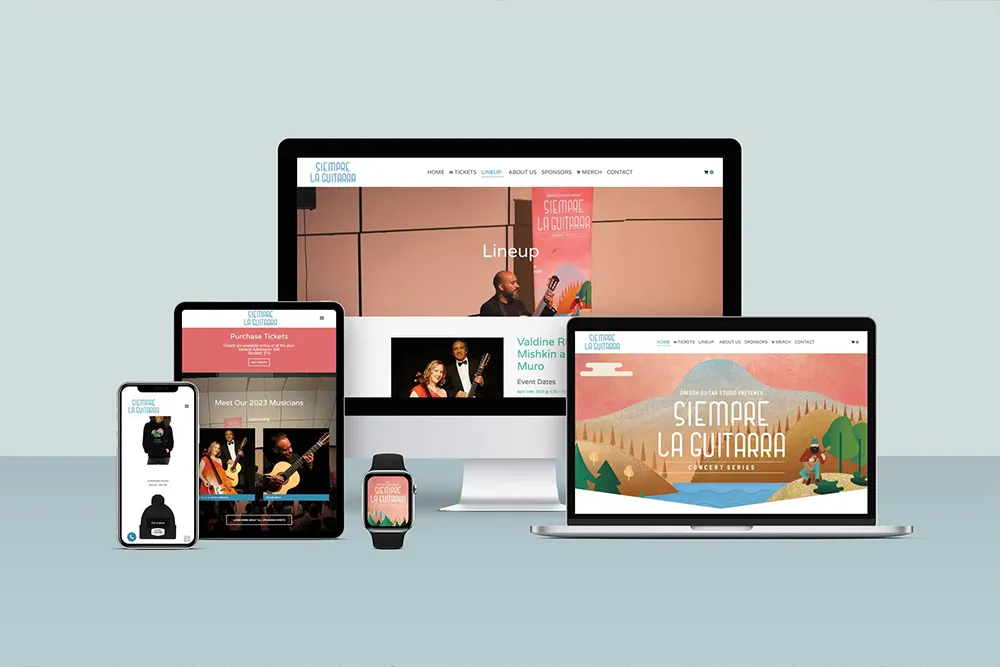
Nonprofit organizations often underinvest in visual identity relative to commercial businesses of similar scale. The result is website design for nonprofits that looks underfunded regardless of the quality of the work the organization actually does. Visual credibility matters. A site that looks like it was assembled from free templates and stock photos signals resource constraints in ways that erode donor confidence.
Custom illustration, strong photography that shows real people and real work, and a consistent visual identity applied across the site all contribute to the kind of credibility that makes a visitor more likely to trust the organization with their donation.
Outdated Content
A nonprofit website with an event listing from two years ago, a news section that has not been updated since the last executive director, or a staff page with three positions marked vacant is a site that signals organizational instability. Fresh content signals an active organization. Stale content signals the opposite.
Poor Mobile Performance
Donors increasingly discover nonprofit organizations through social media on mobile devices. A site that does not perform well on mobile is turning away the audience that social media is driving to it.
View the Elakha Alliance Case Study
The WordPress Advantage for Nonprofits
WordPress is well suited for nonprofit website design for several reasons. It is open source with no licensing fees, which matters for organizations managing tight budgets. It has a robust ecosystem of plugins for donation processing, event management, volunteer coordination, and membership management. And it gives communications staff meaningful control over content without requiring a developer for every update.
A wordpress nonprofit website built with a clean theme, properly configured plugins, and a content management system that staff can actually use is a tool the organization can operate independently after launch. That independence is worth building toward rather than creating ongoing dependence on an outside developer for routine content changes.
Graphicsbyte and Nonprofit Work
Graphicsbyte has worked with nonprofit organizations including the Portland Youth Philharmonic, the oldest youth orchestra in the country, and the Elakha Alliance, a nonprofit working to restore sea otters to Oregon’s coastline. Both engagements involved understanding the mission deeply enough to communicate it clearly to an audience that was encountering the organization for the first time.
That work is handled with the same direct engagement that drives every Graphicsbyte project. The person building the site understands the mission, the audience, and the design decisions that serve both. That understanding does not get lost in a handoff.
What makes nonprofit website design different from commercial website design?
A nonprofit website has to serve multiple conversion goals simultaneously including donations, volunteer recruitment, program participation, and public education while building trust with visitors who may have no prior familiarity with the organization. Commercial sites typically optimize for a single primary conversion. The complexity of serving multiple audiences with different needs and different levels of prior knowledge is what makes nonprofit website design a distinct discipline.
How much does a nonprofit website design project cost?
Nonprofit website projects vary in cost based on scope, page count, and functionality requirements including donation processing, event management, and membership systems. Many designers offer nonprofit pricing that reflects the budget realities of mission-driven organizations. A professionally designed WordPress nonprofit site typically starts in the mid-thousands and scales with complexity. It is worth asking specifically about nonprofit rates when evaluating agencies.
What platform should a nonprofit use for its website?
WordPress is generally the strongest choice for nonprofit organizations. It has no licensing fees, a robust plugin ecosystem for nonprofit-specific functionality, and gives staff meaningful content management control after launch. It also integrates cleanly with donation platforms like Stripe, PayPal, and dedicated nonprofit tools.
How important is accessibility for a nonprofit website?
Accessibility is particularly important for nonprofit websites because the audiences they serve often include people with disabilities. Many nonprofits also receive government funding or partner with government agencies that have explicit accessibility requirements. Building to WCAG 2.1 Level AA is the appropriate standard and is increasingly expected rather than optional.
What should a nonprofit prioritize when rebuilding its website?
Start with the mission communication and the donation path. A visitor who does not understand what the organization does within the first few seconds will not reach the donate button regardless of how well that button is designed. Clear mission communication and a frictionless donation experience are the foundation everything else builds on.