Table of Contents
Both can be worth it. Neither is automatically a good deal.
Freelance contractor work and white label design projects get pitched as easy revenue. Fill a slow month, learn a new industry, build a relationship with an agency that keeps sending work. The pitch is not wrong. Both models have real value for independent designers and studio operators at the right moment and at the right rate.
But both come with dynamics that are worth understanding before you say yes to the first project. The time-value problem in particular catches fast designers off guard in ways that quietly undercut the profitability of work that looked reasonable on paper.
This post covers what each model actually involves, where the value is, where the risk lives, and how to evaluate whether a contractor or white label opportunity is worth taking.
What Freelance Contractor Work Actually Is
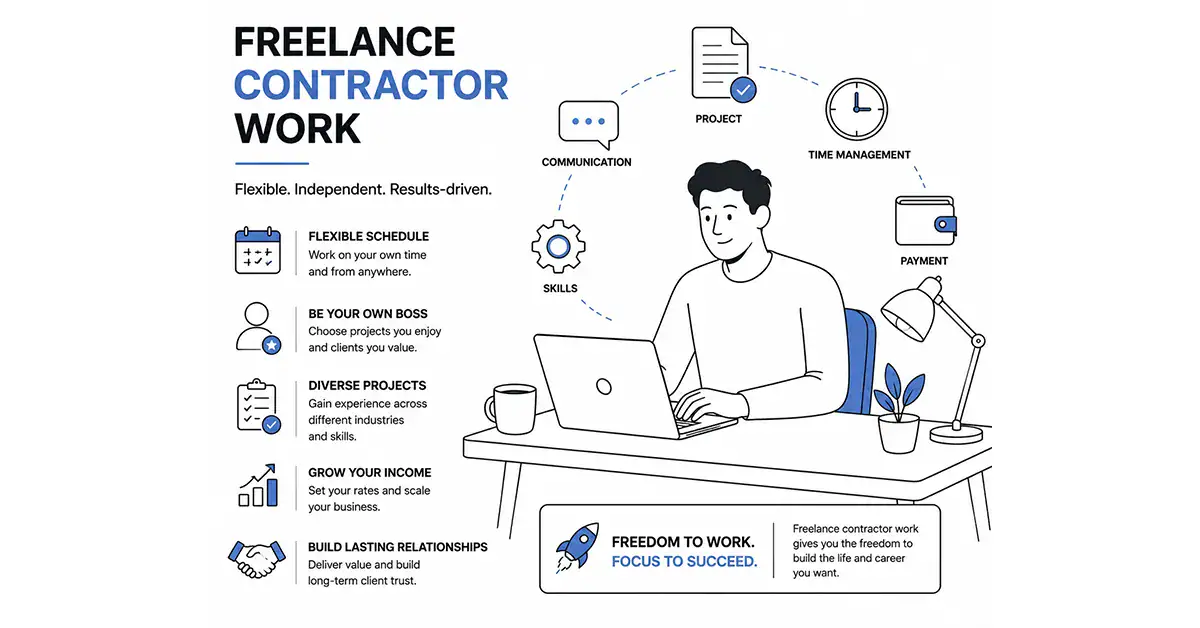
Contractor work in the design context means working for another agency or studio on a defined project or for a defined period with a clear end date. You are not an employee. You do not sit in on every meeting or attend every company all-hands. You come in for a specific scope, deliver the work, and move on.
The appeal is straightforward. A predictable income stream for the duration of the contract, exposure to industries and project types you might not encounter through your own client base, and a working relationship with an agency that may bring you back for future projects.
The end date is actually one of the most underrated features of contractor work. Unlike a permanent position there is a built-in exit. The project ends, the relationship concludes cleanly, and you return to your own studio work without the complexity of a resignation or a difficult conversation about leaving.
Contractor work is worth taking when the rate is fair, the agency communicates well, and the project type adds something to your experience that you would not get from your own clients. It is worth declining when the rate does not account for the overhead of working within someone else’s system or when the project pulls you away from your own business at a moment when your pipeline needs attention.
What White Label Design Work Actually Is
White label work is design produced under your name or your studio’s process but delivered under the agency’s brand. The end client never knows you exist. The agency presents the work as their own and charges their client accordingly.
The dynamic is common and legitimate. Agencies bring in outside talent for overflow work, for specialized skills they do not have in-house, or for capacity during busy periods. The designer gets paid, the agency fulfills their commitment to the client, and the end client gets the work they need. Everyone wins in theory.
In practice white label work introduces a specific challenge that contractor work does not. You are working for an intermediary who has their own relationship with the end client, their own opinions about the work, and their own margin to protect. The feedback loop is longer. Revisions go through an extra layer. And the rate you are paid reflects the agency’s margin rather than the full value of the work.
White label is worth taking when the rate accounts for that overhead, when the agency relationship is clean and communicative, and when the work type fits naturally into your existing workflow. It is worth declining when the rate is structured around what the agency wants to pay rather than what the work is actually worth.
View the True Terpenes Case Study
The 1099 Reality Makes the Math Even More Important
Contractor and white label work almost always comes through as 1099 income. No taxes withheld, no employer contribution to Social Security or Medicare. Just the gross payment landing in your account with the full tax burden sitting behind it.
The standard guidance for 1099 contractors is to set aside roughly 30 percent of every payment for taxes. Federal income tax, self-employment tax, and state income tax depending on where you operate all come out of that gross number. What looks like a $1,500 project payment is closer to $1,050 in actual take-home income once that reserve is set aside responsibly.
That changes the rate math significantly. A white label engagement that felt reasonable at face value needs to clear a higher bar once the 1099 tax reality is factored in. If the effective hourly rate after taxes does not beat what you earn from direct client work after the same calculation the engagement is quietly costing you money in a way that is easy to miss until tax season arrives.
Run the full calculation before saying yes. Take the project rate, subtract 30 percent for taxes, estimate how long the work will actually take you, and divide. If that number is lower than your effective after-tax hourly rate from your own clients the engagement is subsidizing someone else’s margin with your time and your tax burden.
The Time-Value Problem Nobody Talks About
Here is the dynamic that catches fast designers off guard in both contractor and white label work.
Most project rates in these arrangements are set based on what the work takes an average designer to complete. An hour of logo exploration. Three hours of page layout. Two days for a brand identity concept. Those estimates become the basis for the rate offered.
If you are faster than average, and most experienced designers are, you complete that work in a fraction of the estimated time. What took the rate-setter three hours takes you forty-five minutes. The quality is the same or better. But you get paid for three hours of value while only investing forty-five minutes of time.
That sounds like a win. In some cases it is. But the problem surfaces when the rate is low enough that even at forty-five minutes of actual work the hourly equivalent is still below what you would earn from your own clients at your own rates.
The math worth running before accepting any contractor or white label engagement is simple. Take the project rate. Estimate honestly how long it will take you specifically, not how long it would take the average person. Divide the rate by your actual hours. If that number is lower than your effective hourly rate from your own clients you are subsidizing the agency’s margin with your efficiency.
Fast designers with premium skill sets are most vulnerable to this because their speed creates the illusion of easy money without accounting for the opportunity cost of time that could have gone toward higher-value work.
When the Client Learns Your Speed
There is a specific dynamic in contractor and white label work that does not get talked about enough. The moment a client or agency learns how fast you actually work the rate negotiation shifts permanently in their favor.
It happened directly in the Graphicsbyte studio. A client was budgeting four hours for work that was consistently getting done in forty-five minutes. At first that felt like an advantage. The same payment for a fraction of the time invested. But the client noticed the turnaround speed and the work that came in after that reflected it. More tedious tasks, tighter scopes, lower budgets. The reasoning was implicit but clear. If you can do it that fast it should not cost that much.
The client was capturing nearly all the value of the efficiency while the studio absorbed the cost of it. The forty-five minute delivery that should have been a premium signal became the justification for a below-market rate.
The lesson is not to work slower. It is to protect your rate regardless of your speed. Your efficiency is a competitive advantage that belongs to your business not a discount you pass on to the client. If a four-hour task takes you forty-five minutes the right response is to charge for four hours of expert work or to renegotiate the scope to reflect the volume of work your speed makes possible. The wrong response is to let the client set the price based on the clock rather than the outcome.
This is also why project-based rates almost always serve independent designers better than hourly rates in contractor and white label work. A project rate locks in the value of the deliverable regardless of how efficiently you produce it. An hourly rate punishes efficiency and rewards slowness in a way that works directly against the interests of an experienced fast designer.
What Contractor and White Label Work Is Actually Good For
Neither model is inherently bad. Both serve real purposes at specific moments in a studio’s development.
Learning new industries
Taking contractor work with an agency that serves a different market than your own client base exposes you to industries, client types, and project scopes you would not encounter independently. That exposure builds range and makes you a more versatile designer. The Graphicsbyte client roster spans cannabis, food and beverage, nonprofit, industrial, tech consulting, and construction in part because early contractor work created exposure to industries that later became direct client relationships.
Building agency relationships
A well-executed white label project is the best possible introduction to an agency. You solve a problem they could not solve internally, you deliver on time, and you make them look good to their client. That relationship becomes a referral source, a future contractor opportunity, or a long-term working partnership that sends work your way without you having to chase it.
Filling genuine gaps
Slow periods happen. A contractor engagement that fills a quiet month with predictable income while keeping skills sharp is a reasonable business decision even if the rate is not premium. The key is knowing you are making a deliberate tradeoff rather than discovering six months later that you were consistently underpricing your time.
Expanding your portfolio scope
Some project types only come through agencies. Large-scale brand systems, enterprise-level website work, international packaging. If those project types align with where you want to take your studio, taking white label work that builds experience in that territory is a legitimate investment in your own positioning even at a rate that does not fully reflect the work’s market value.
View Our Work
How to Evaluate Whether to Say Yes
A few questions worth asking before committing to any contractor or white label engagement.
What is the effective hourly rate based on your actual speed, not the agency’s estimate? Run the math honestly before the project starts.
Is the agency relationship one you want to develop? A white label project with an agency whose work you respect and whose clients align with the direction you want to take your own business is a different proposition than a white label project with an agency you would never want to be associated with publicly.
What is the opportunity cost? What are you not working on while this project runs? If your own pipeline has leads that need attention or your own content strategy needs work the contractor engagement has a cost beyond the hours it consumes.
Is there a clear end date? Open-ended contractor arrangements have a way of expanding indefinitely. A defined scope or a defined period gives you the exit that makes contractor work worth taking in the first place.
Does the agency communicate well? The single biggest predictor of whether a white label or contractor engagement is pleasant or miserable is how the agency handles communication. A slow agency with unclear feedback makes your efficient work slower and more frustrating than it needs to be.
Will they learn your speed and use it against you? If the answer is probably yes price accordingly from the start or decline.
The Graphicsbyte Perspective
Most of the Graphicsbyte portfolio has been built through direct client relationships. But contractor work and white label projects have shown up at different points in the studio’s history and the experience shaped how those opportunities get evaluated now.
The clearest lesson from those engagements is that the rate needs to reflect your actual value not the industry standard for the task and certainly not what the client thinks the task should cost based on how fast you work. Efficiency is a premium not a discount.
The second lesson is that the 1099 tax reality has to be part of the calculation from the first conversation about rate. A project that looks profitable at the gross number may not be profitable at the after-tax number. Running that math upfront is not pessimism. It is accurate accounting.
Both models have a place in a studio’s revenue mix. Neither should be the default.
Is freelance contractor work worth taking for an independent designer or studio?
It depends on the after-tax rate, the agency relationship, and the opportunity cost at that specific moment. Contractor work is worth taking when the effective hourly rate after setting aside roughly 30 percent for 1099 taxes is competitive with what you earn from your own clients, when the project type adds genuine experience or industry exposure, and when your own pipeline does not have higher-value work waiting. It is worth declining when the math does not hold up or when it pulls you away from your own business at a critical moment.
What is the time-value problem in white label and contractor design work?
The time-value problem occurs when a project rate is set based on average completion time but you complete the work significantly faster than average. The quality is the same or better but the effective hourly rate drops because your speed means you invest less time for the same payment. Fast experienced designers are most vulnerable to this because their efficiency creates the illusion of easy money without accounting for what the same hours would earn on direct client work. Add the 1099 tax reality on top and the numbers can shift quickly against you.
How does 1099 tax liability affect the profitability of contractor and white label work?
As a 1099 contractor no taxes are withheld from project payments. Setting aside approximately 30 percent of every payment for federal income tax, self-employment tax, and state income tax is the responsible baseline. What looks like a competitive project rate at the gross number may be below your effective rate from direct client work once the tax reserve is calculated. Always run the after-tax math before committing to a contractor or white label engagement.
Why do project-based rates work better than hourly rates for fast designers?
An hourly rate punishes efficiency. If you complete in forty-five minutes what takes an average designer three hours an hourly rate means you earn significantly less for the same quality of output. A project rate locks in the value of the deliverable regardless of how efficiently you produce it. For fast experienced designers project-based rates are almost always the more profitable structure in contractor and white label work.
What should I do if a client uses my speed against me to lower rates or increase tedious work?
Protect your rate regardless of your delivery speed. Your efficiency is a competitive advantage that belongs to your business. If a client starts sending more tedious lower-budget work after learning how fast you are the options are to renegotiate the rate upward to reflect the volume your speed makes possible, to shift to project-based pricing that decouples the rate from the clock, or to exit the engagement and redirect that time toward direct client work at your actual market rate.