Table of Contents
Inconsistent branding is costing you trust before anyone reads a word
If your logo looks slightly different on your business card than it does on your website, if the colors on your printed brochure do not match your social profiles, if your fonts change depending on who designed the last piece of collateral, you have a brand consistency problem.
That problem is more common than most business owners realize and more damaging than most expect. Every inconsistency signals to a potential customer that the business is disorganized, unprofessional, or too small to have its act together. That signal registers before a single word of copy is read.
The good news is this is fixable. Inconsistent brand design almost always comes from the same root causes and there is a clear process for resolving it.
Graphicsbyte fixes brand consistency problems for businesses in Portland Oregon and the surrounding area. If your brand looks different everywhere it shows up reach out at graphicsbyte.com/contact. All inquiries receive a response within one business day.
Why Your Brand Looks Inconsistent
No Brand Guidelines Document Exists
The most common cause of inconsistent branding is the absence of a brand guidelines document. Without one every person who touches the brand makes their own decisions. The social media manager picks a font that looks close to the original. The print vendor uses a color value that is close but not exact. The web developer applies a logo version that was never meant for dark backgrounds.
Each decision is made with good intentions. The cumulative effect is a brand that looks like it was assembled by several different people who never talked to each other. Because it was.
A brand guidelines document specifies exactly how every element gets used. The correct logo versions and when to use each one. The exact color values for print and digital. The typefaces and how they get applied across different contexts. The rules that ensure everyone touching the brand makes the same decisions.
Multiple Vendors With No Shared Reference
Most small businesses have had their branding touched by multiple vendors over time. A logo designed by one person. A website built by someone else. Print materials handled by a local print shop that used whatever files they had. Social graphics made in Canva by a team member who was not a designer.
Each vendor worked from whatever files they had access to and whatever their own aesthetic preferences suggested when the guidelines were unclear. The result is a visual identity that drifts further from its original intent with every new piece of collateral produced.
Incorrect File Formats Used in the Wrong Contexts
A logo saved as a low resolution JPEG and used on a billboard. A color specified as a web hex value reproduced on a printed brochure without converting to CMYK. A font embedded in a PDF that gets substituted when opened on a different computer.
These are technical problems that look like design problems. The underlying brand may be strong but the files being used to represent it are wrong for the context. The solution is a complete file audit and a proper asset library that gives every vendor the right file for every application.
The Brand Has Evolved But the Assets Have Not
Businesses change over time. A company that started five years ago with a simple logo may have evolved its positioning, its audience, and its visual preferences without ever formally updating the brand system to reflect those changes. The result is a brand that looks inconsistent because it is actually several different versions of itself operating simultaneously.
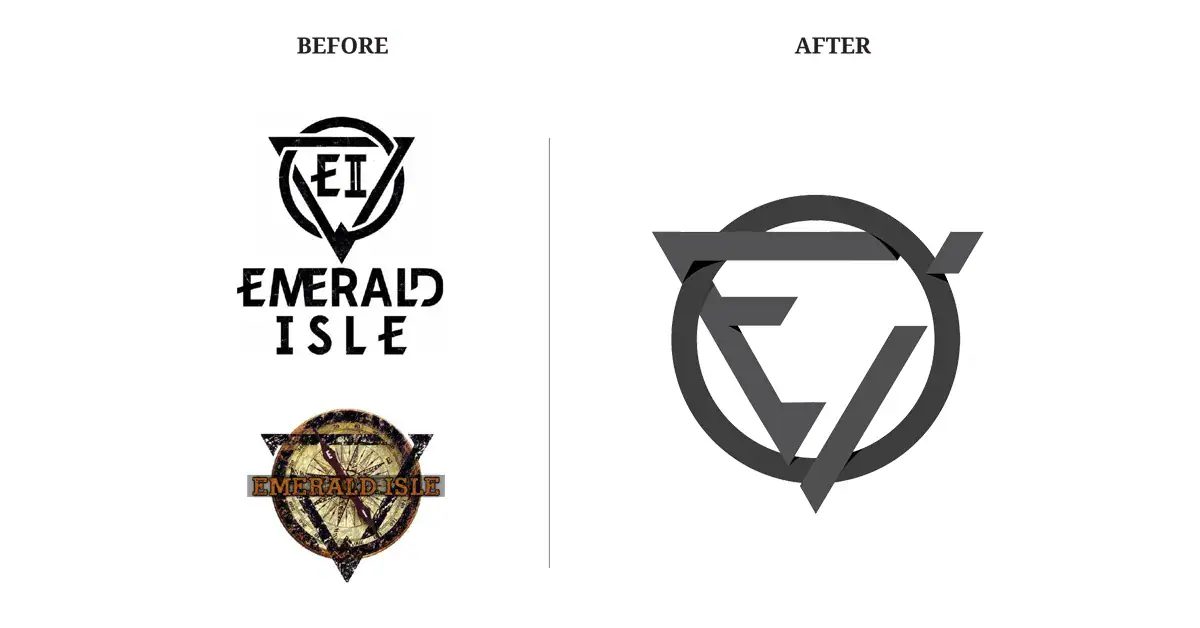
Learn about how we fixed the Emerald Isle Icon.
What Fixing Inconsistent Branding Actually Involves
Brand Audit
The first step is understanding exactly where the inconsistency lives. A brand audit reviews every active touchpoint including the website, social profiles, print materials, email signatures, presentations, and any other surfaces where the brand appears. The audit documents what exists, identifies where the inconsistencies are most visible, and establishes what needs to change.
Asset Consolidation and Cleanup
Once the audit is complete the existing brand assets get consolidated. Correct logo files in all necessary formats. Exact color values specified for both print and digital use. Typography identified and licensed properly. A master asset library created that gives every vendor and team member access to the right files.
This step alone resolves a significant portion of brand consistency problems because most inconsistency comes from vendors using whatever files they could find rather than the correct ones.
Brand Guidelines Development or Update
If no brand guidelines document exists one gets created. If one exists but is outdated or incomplete it gets updated to reflect the current brand accurately. The guidelines document becomes the single source of truth that every vendor, team member, and future designer works from.
Application Across Touchpoints
With the guidelines in place the inconsistent touchpoints get brought into alignment. The website gets updated to match the correct color values and typography. Print templates get rebuilt with the right files. Social profile assets get standardized. Email signatures get corrected.
The result is a brand that looks like it came from one place regardless of where a customer encounters it.
The Difference It Makes
Brand consistency compounds over time in the same way that brand inconsistency erodes trust over time. Every consistent touchpoint reinforces the same visual signals and makes the brand more recognizable. Every inconsistency introduces doubt about whether the business is as professional as it claims to be.
For a business that relies on first impressions, which is every business with a public presence, brand consistency is not a design preference. It is a business requirement.
Why does my brand look different on my website versus my print materials?
The most common reason is that different vendors produced each piece using different files, different color values, or different versions of the logo without a shared reference document telling them exactly what to use. Print and digital color systems also work differently. A color specified as a web hex value will not reproduce accurately in print without being converted to CMYK values first. A brand guidelines document that specifies both formats for every color eliminates this problem.
How do I fix inconsistent branding across my business?
The process starts with a brand audit that documents every active touchpoint and identifies where the inconsistencies are most visible. From there the existing assets get consolidated into a correct master file library. A brand guidelines document gets created or updated to specify exactly how every element gets used. Then the inconsistent touchpoints get brought into alignment using the correct files and specifications. Graphicsbyte handles this process for businesses in Portland Oregon and the surrounding area. Reach out at graphicsbyte.com/contact.
Do I need to redesign my logo to fix brand inconsistency?
Not necessarily. If the underlying logo is strong and recognizable the solution is usually about creating proper files, specifying exact values, and documenting usage rules rather than starting over. A redesign makes sense when the logo itself is the problem. An audit is the right starting point to determine which situation applies.
What is a brand guidelines document and why do I need one?
A brand guidelines document specifies exactly how every element of the brand gets used including which logo versions to use in which contexts, exact color values for print and digital, typeface names and how they get applied, and rules for how the brand appears across different surfaces. Without one every vendor and team member makes their own interpretation of the brand which produces inconsistency over time. With one every person touching the brand makes the same decisions regardless of who designed the original.
How much does fixing inconsistent branding cost?
The cost depends on how many touchpoints need to be addressed and whether the underlying brand system needs to be rebuilt or just documented and standardized. A focused brand consistency project that audits existing assets, creates a proper file library, and produces brand guidelines typically starts in the low thousands. It is significantly less expensive than the cumulative cost of reprinting materials, rebuilding a website, and losing customers to competitors whose brands look more professional.