Table of Contents
AI generated images and code cannot be copyrighted without meaningful human creative input. Here is what the AI copyright law means for your brand.
If your brand is using AI generated images for visual identity, marketing materials, or illustration work you may not own what you think you own. The US Copyright Office has been consistent on this point since 2023. Works generated entirely by AI without meaningful human creative authorship are not eligible for copyright protection. That applies to images, illustrations, logos, and in most contexts code generated by AI tools.
This post covers what the ai copyright law actually says, what level of human involvement qualifies for protection, what the landmark cases have established, and what practical steps brands and creative professionals need to take to protect their work in an environment where AI tools are increasingly embedded in the creative process.
What the US Copyright Office Has Said
The US Copyright Office issued guidance in February 2023 and has reinforced it consistently since. The position is clear. Copyright protection requires human authorship. A work generated entirely by an AI system in response to a text prompt does not qualify for copyright protection because there is no human author in the legally required sense.
The Office used the example of an artist who provides a prompt to an AI tool. The resulting image reflects the machine’s expression not the human’s. The human provided direction but the creative execution was performed by the system. That distinction matters because copyright protects the expression of an idea not the idea itself. When the expression is generated by a machine the human’s contribution is the concept and the instruction, neither of which are protectable under copyright law.
The Office has also addressed the question of AI assisted work specifically. When a human uses AI as a tool in a creative process and exercises meaningful creative control over the final output, selecting, arranging, modifying, and making authorship decisions about the generated elements, those human-contributed elements can qualify for protection. The AI-generated portions remain unprotectable. The human creative contributions are protectable.
The threshold phrase is meaningful creative control. That standard has not been defined with a specific number of modifications or a percentage of human input. It requires genuine creative decision-making by a human author that goes beyond simply writing a prompt and accepting the output.
The Cases That Established the Boundaries
Thaler v. Perlmutter 2023
Stephen Thaler attempted to register a copyright for an image generated entirely by his AI system called the Creativity Machine with the AI listed as the author. The US District Court for the District of Columbia upheld the Copyright Office’s refusal to register the work. The court held that human authorship is a prerequisite for copyright protection and that the image generated entirely by a machine without human creative input did not qualify.
This case established the hard floor. A work with no human creative contribution cannot be copyrighted regardless of how sophisticated the AI system that produced it is.
Zarya of the Dawn 2023
Kristina Kashtanova registered a comic book called Zarya of the Dawn that used Midjourney-generated images alongside her written story and arrangement decisions. The Copyright Office partially cancelled the registration. The written text and the selection and arrangement of the images were found protectable as human-authored creative work. The individual AI-generated images were not protectable.
This case established the ceiling and the floor simultaneously. Human creative contributions surrounding or incorporating AI output can be protected. The AI output itself cannot.
Getty Images v. Stability AI
Getty Images sued Stability AI alleging that Stability AI trained its model on millions of Getty images without permission and that the model’s outputs infringe on Getty’s copyrights. This case addresses a different but related question. Not who owns AI output but whether AI training on copyrighted material constitutes infringement. The case is ongoing as of 2026 but the implications are significant. If training on copyrighted images without license constitutes infringement the provenance of AI training data becomes a liability for every company using AI image generation tools.
GitHub Copilot Class Action
A class action lawsuit was filed against GitHub, Microsoft, and OpenAI alleging that GitHub Copilot, an AI code generation tool, reproduces copyrighted code from its training data in its outputs without proper attribution or license compliance. The case specifically targets instances where Copilot reproduces code verbatim or near-verbatim from open source repositories without including the required license notices.
This case is the most directly relevant to developers using AI code generation tools. If Copilot and similar tools can reproduce licensed code in their outputs without attribution, code generated by those tools may carry embedded license obligations the user is unaware of. Using that code in a commercial product could constitute license infringement.
What This Means for AI Generated Images
You cannot trademark AI generated logos
Trademark registration requires that the mark be distinctive and that the applicant own the underlying work. If the underlying logo was generated entirely by AI it cannot be copyrighted and the trademark application faces significant obstacles. The USPTO has increasingly flagged AI generated marks during examination. A logo built on an AI generated foundation is legally vulnerable in ways a professionally designed logo is not.
Competitors can replicate your AI generated visuals
Because AI generated images are not copyrightable a competitor who produces a similar image using the same or similar tools has committed no infringement. There is no legal basis to prevent it. For brand identity work where distinctiveness and exclusivity are the entire point this is a fundamental problem. Professional illustration and design produces work that can be registered and defended. AI generated work cannot.
The style approximation problem
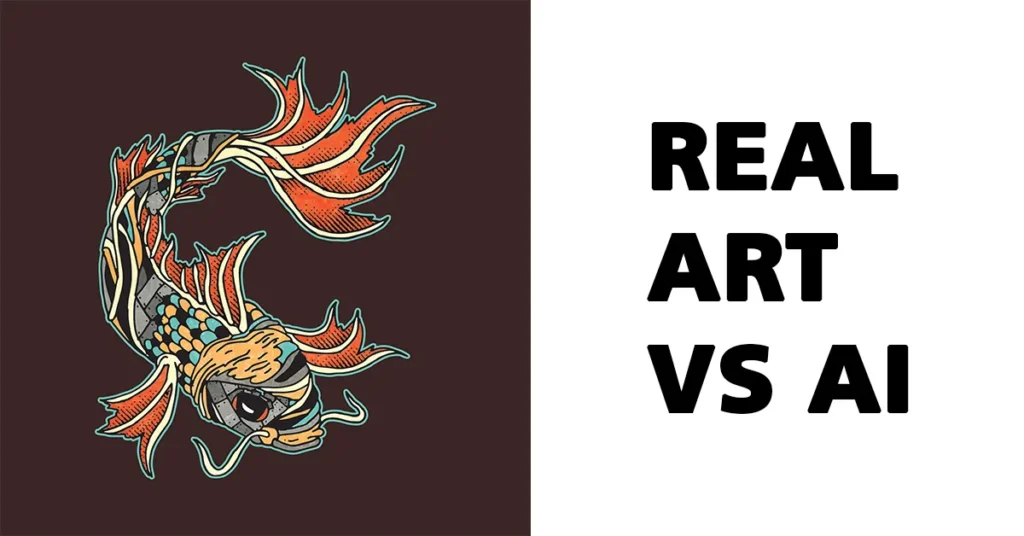
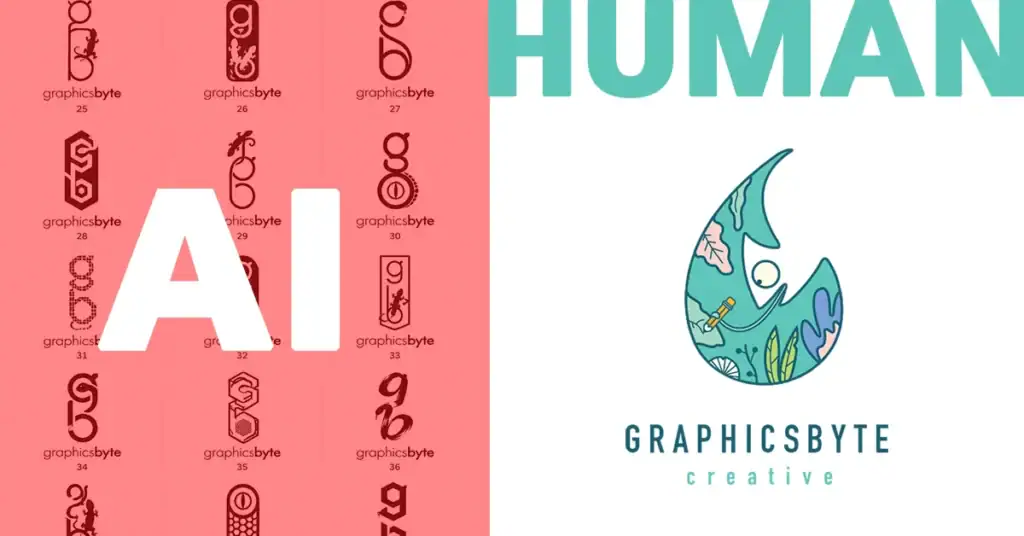
As documented in the biomechanical illustration comparison elsewhere on this site AI tools trained on an artist’s existing work can produce outputs that approximate that artist’s style. The outputs are not infringement of the original works in most cases because style itself is not copyrightable. But the original works that were used to train or reference the AI may be. The legal landscape around style imitation via AI training is actively contested.
The human manipulation threshold in practice
If you use AI to generate a base image and then make significant creative modifications in a tool like Photoshop or Illustrator the human-contributed elements may qualify for protection. The modifications need to reflect genuine creative authorship not just minor adjustments. Changing a color or resizing an element is not sufficient. Substantially redrawing, recomposing, or transforming the AI output through creative decisions that reflect human authorship is more likely to qualify.
The safest position is to treat AI generated images as unprotectable reference material and commission human-created final artwork for anything that needs to function as a brand asset.
Have a design project? Let's Chat about it!
What This Means for AI Generated Code
Copilot and similar tools may embed license obligations
The GitHub Copilot class action highlights a real risk for developers using AI code generation tools. If the tool reproduces code from its training data the reproduced code may carry license obligations, attribution requirements, or copyleft provisions that pass through to the codebase using it. Most developers using these tools are unaware of what training data contributed to a specific output.
For commercial software this is not a theoretical risk. If AI generated code in a production codebase is found to reproduce GPL licensed code without compliance the entire codebase may be subject to GPL requirements. That is a significant legal and commercial exposure.
Who owns code written by AI
If a developer uses an AI tool to generate code and makes no meaningful creative modifications the code is likely not copyrightable as human-authored work. The developer cannot claim copyright on the output. The AI company typically disclaims ownership of outputs in their terms of service. The result is code that nobody owns, which sounds harmless but means nobody can enforce rights over it if it gets copied or used without permission.
For proprietary software where the codebase is a core business asset this creates a real problem. A competitor who obtains and uses uncopyrightable AI generated code has committed no infringement. There is no legal remedy.
The meaningful human authorship standard for code
Code that is generated by AI and then substantially modified, refactored, and built upon by a human developer over time accumulates human authorship. The final codebase may be protectable even if individual functions originated as AI output, provided the human creative contributions are substantial and genuine.
The practical approach is to treat AI generated code as a starting point that requires meaningful human development before it is used in anything proprietary or commercially sensitive.
What Brands Need to Do Right Now
Audit your AI generated assets
Identify every piece of visual content in your brand system that was generated by AI without substantial human modification. Logos, illustrations, icons, backgrounds, marketing images. Any of these that cannot demonstrate meaningful human creative authorship are legally unprotectable and should be flagged for replacement or substantial rework.
Commission human-created work for brand assets
Anything that needs to function as a long-term brand asset, logo, visual identity, packaging illustration, character design, requires human authorship to be legally protectable. AI generated work cannot fulfill this function regardless of how visually appealing the output is.
Document human creative contributions
If you use AI tools in your creative process document the human creative decisions that were made. Which elements were selected from multiple AI outputs. What modifications were made. What creative judgment was applied. This documentation supports a claim of human authorship if the protection of the work is ever challenged.
Consult an intellectual property attorney
The legal landscape around AI and copyright is evolving. The cases cited in this post reflect the state of the law as of mid 2026 but litigation is ongoing and the Copyright Office continues to refine its guidance. For brands with significant investment in creative assets the cost of an IP consultation is modest compared to the cost of discovering later that those assets cannot be defended.
The Graphicsbyte Position
Every piece of creative work produced by Graphicsbyte is human-authored. Logos, illustrations, visual identity systems, packaging artwork, and WordPress website designs are all produced through a process where creative decisions are made by Mark Boehly, a named human designer with over a decade of documented client work.
That authorship is protectable. The work can be registered, trademarked, and defended. When you commission work from Graphicsbyte you receive assets you actually own.
Like what you read? Add Graphicsbyte as a preferred source to see more web design, branding, and illustration posts in your Google results.
Can AI generated images be copyrighted?
No, not without meaningful human creative input. The US Copyright Office has held consistently since 2023 that works generated entirely by AI without human creative authorship are not eligible for copyright protection. AI generated images can be incorporated into a larger human-authored work where the human creative contributions are protectable, but the AI generated elements themselves remain unprotectable.
Can I trademark a logo made by AI?
Trademark registration is significantly more difficult for AI generated logos. The USPTO requires the applicant to own the underlying work and AI generated works cannot be copyrighted without human authorship. A logo built on an AI generated foundation is legally vulnerable compared to a professionally designed logo with clear human authorship. Consulting a trademark attorney before investing in AI generated brand identity is strongly recommended.
Does using AI to generate code create legal risks?
Yes. AI code generation tools including GitHub Copilot may reproduce code from their training data including code covered by open source licenses with specific requirements. Code generated by these tools may carry embedded license obligations the user is unaware of. For commercial software development understanding the provenance of AI generated code is important before using it in a production codebase.
What level of human modification makes AI generated content protectable?
The Copyright Office requires meaningful creative control by a human author. Minor modifications like color changes or resizing are generally not sufficient. Substantial creative reworking, selection, arrangement, and transformation of AI generated elements through genuine human authorship decisions is more likely to qualify for protection. The threshold has not been defined with a specific number or percentage and is evaluated case by case.
What should brands do about AI generated assets they are already using?
Audit existing AI generated assets to identify what lacks meaningful human authorship. Assets that cannot demonstrate human creative contributions should be flagged for replacement with human-authored work or for substantial human reworking that qualifies for protection. For brand identity assets specifically, logos and visual identity systems, professional human-authored design is the only legally defensible foundation for a brand that needs to protect and enforce its visual identity over time.