Table of Contents
AI cannot recreate a technically complex illustration style. Here is the proof.
AI image generators can approximate the surface aesthetic of a complex illustration style. They cannot replicate the underlying logic that makes it coherent. I know this because I asked ChatGPT to recreate my biomechanical illustration style using my own work as a reference and documented exactly where it failed.
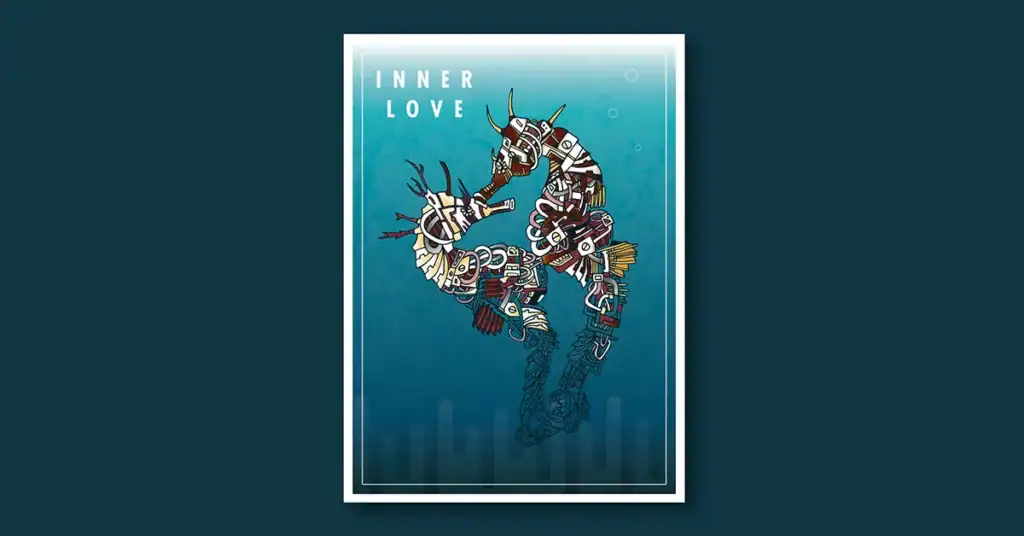
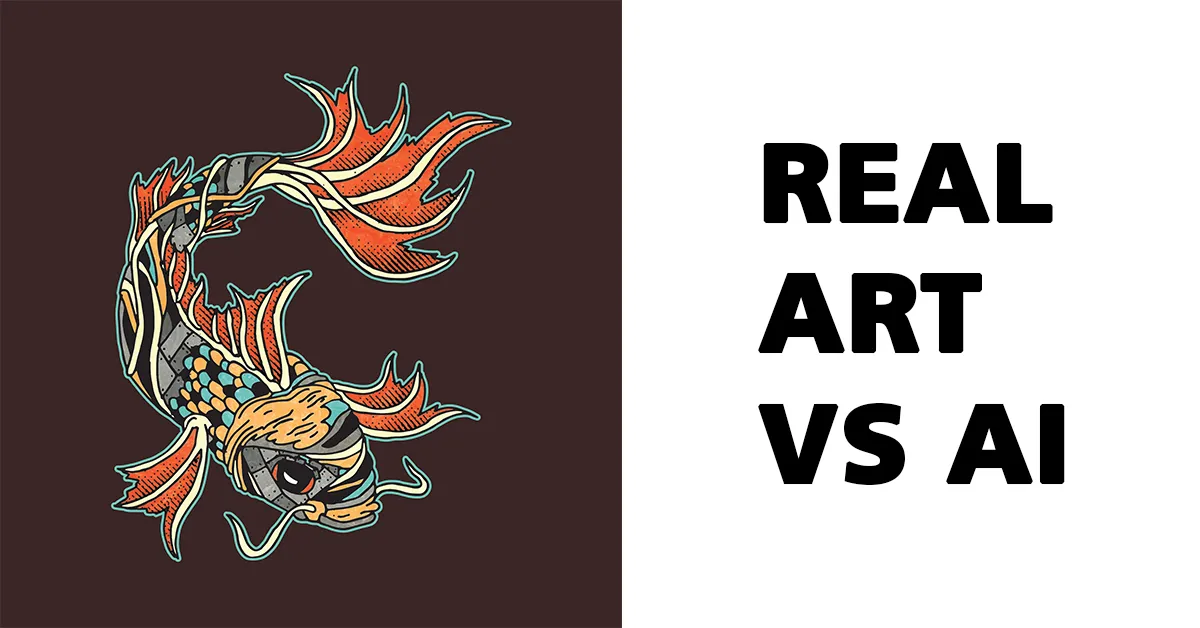
The original piece is the Biomechanical Koi, an illustration I made in 2017 that has accumulated significant history across the web. The AI attempt is a biomechanical bat generated by ChatGPT using the Koi as a style reference. The comparison is specific, visual, and technical. It shows not just that AI failed but precisely how and why it failed at each level of the illustration.
I am Mark Boehly, founder of Graphicsbyte, a branding and illustration studio based in Gladstone Oregon just outside Portland. I have been developing this illustration style for over a decade. What you are about to read is the most direct evidence I have ever seen of the gap between what AI can approximate and what a trained practitioner actually understands.
The Original: Biomechanical Koi 2017
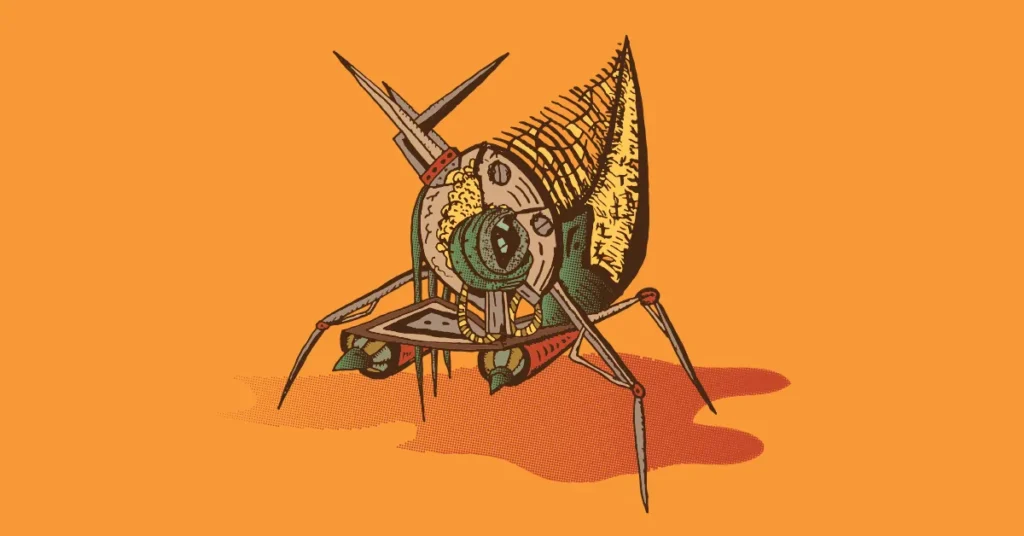
The Biomechanical Koi was made in 2017 and represents the core principle of the biomechanical illustration style as I practice it. The mechanical elements are not applied to the fish. They are the fish.
Every scale, every fin structure, every anatomical feature was rebuilt from scratch using mechanical logic. Plating follows the natural curvature of the body not because a texture was overlaid but because each plate was drawn individually to conform to the underlying form. The exposed structural elements, the tubes, the hardware, the internal components, emerge from within the body at points where the organic anatomy would naturally create openings or transitions. The mechanical and the organic coexist because they were designed together from the inside out at the skeletal level.
The texture variation across the piece reflects deliberate mark-making decisions. Smooth plated surfaces read differently from textured organic areas. Fin structures have different line weight and density than body armor. The color relationships between the teal, orange, cream, and gray are specific and intentional, calibrated to create depth and temperature contrast across the mechanical and organic zones simultaneously.
This is the style ChatGPT was asked to recreate.
Looking for an Illustrator for Your Next Project?
The AI Attempt: What ChatGPT Produced
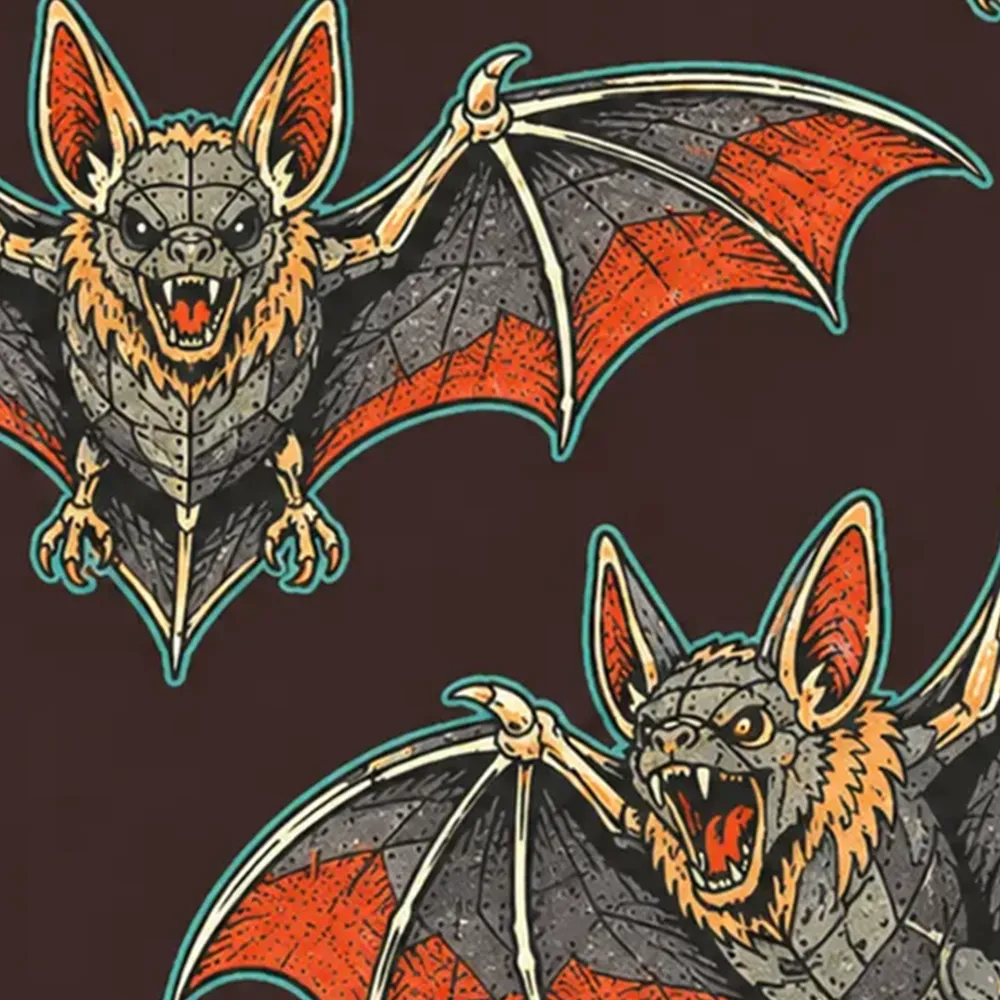
ChatGPT generated a biomechanical bat in multiple poses. At first glance the output has surface qualities that resemble the style. There is mechanical plating. There are exposed structural elements. There is a similar color palette of orange, gray, and cream. From a distance it looks adjacent to the original.
The closer you look the more it falls apart. Here is the breakdown section by section.
Section 1: The Six Limb Problem
Start with the most obvious failure because it requires no design expertise to see. Count the limbs on the bat perched on the rock in the multi-pose sheet.
A bat has four limbs. Two wings which are the forelimbs. Two legs. The wings and the legs are the complete set. A bat cannot simultaneously display fully spread wings and four separate visible limbs because the wings are the forelimbs.
The ChatGPT bat on the rock has six limbs. Two spread wings, two visible leg-like appendages gripping the rock, and two additional claw structures extending from the wing joints that read as separate limbs.
This is visual hallucination. The AI needed to show a bat gripping a rock while displaying spread wings and it generated extra limbs rather than understanding the anatomical constraint that makes that combination impossible. It filled in what looked statistically plausible from its training data without understanding the biological rules that govern what a bat actually is.
This single error reveals everything about how AI processes complex illustration. It is not analyzing the subject. It is pattern-filling from adjacent references and generating whatever combination of elements looks visually coherent at the surface level regardless of whether it is anatomically or structurally correct.
Section 2: The Costume Problem
The most fundamental failure in the AI bat is one that requires understanding the style to see clearly. The bat is wearing a mechanical costume. The original Koi is a mechanical creature.
In the ChatGPT output the bat’s fur, facial features, ears, and body structure are conventional animal illustration that has been dressed in a metal texture overlay. The plating sits on top of the bat. The organic animal exists underneath it and the mechanical elements are applied to the surface like armor over flesh.
In the original style that relationship is inverted. The creature is built from mechanical components. The organic elements, the scale texture on the Koi, the fin membranes, the eye, emerge from within a mechanical structure rather than existing independently beneath it. The starting point is machinery. The organic qualities are what the machine expresses, not what it covers.
AI cannot make this distinction because the distinction was never documented anywhere in language. The training data contains thousands of biomechanical illustration images where the aesthetic appears similar on the surface. But the conceptual difference between a mechanical creature and an organic creature wearing mechanical armor was never written down as a rule that a model could learn from. It exists in the decision-making process of practitioners who never needed to explain it because they understood it intuitively.
Section 3: The Nose on the Plate
The single most telling detail in the entire AI output is the bat’s nose.
In the ChatGPT bat the nose is a conventional bat nose, the flat upturned shape characteristic of many bat species, rendered in fur and flesh tones and sitting on top of a metal face plate. The plate is behind the nose. The nose is in front of it. They are two separate elements occupying the same space.
I would never draw it that way. In my style the nose would not exist as a separate organic element overlaid on mechanical structure. The nose would be built from the metal itself. The nostrils would be openings in the plating. The shape of the nose would be defined by the edges of surrounding structural components. The organic function of the nose would be expressed through mechanical form rather than preserved as a separate biological feature sitting on top of it.
That design decision is not arbitrary. It reflects the foundational logic of the style. Nothing organic survives intact in a biomechanical creature. Everything biological has been rebuilt in industrial materials. The nose sitting on a metal plate is the visual equivalent of a seam where the AI’s understanding of the style breaks down completely. It did not know what to do with the nose so it kept the conventional one and put the plate behind it.
Section 4: The Uniform Texture Problem
Look at the texture across the AI bat’s body. The grain distribution is remarkably consistent across every surface. Plated areas, fur areas, wing membranes, and structural elements all carry similar texture density and character.
In the original Koi the texture is a deliberate mark-making system. Smooth metal plating has minimal texture. Organic areas like the body beneath the plating have a different texture character than the mechanical components. Fin membranes have their own line density and direction that describes the transparency and flexibility of the material. Each material type reads differently because each was approached as a distinct drawing problem.
The AI applied what amounts to a noise filter uniformly across the image because texture in its training data appears consistently across biomechanical illustration as an aesthetic quality without the AI understanding that the texture is doing specific descriptive work for different material types. It saw texture as an aesthetic of the style rather than as a tool for communicating material properties.
Section 5: The Multiple Pose Sheet Reveals Everything
The single bat image is close enough that the failures require analysis to articulate. The multiple pose sheet removes any ambiguity.
Across the five poses the bat looks like a completely different creature pressed into the same pattern texture. Each pose uses the same base character, the same face, the same fur rendering, the same mechanical overlay, applied to a different silhouette. The mechanical elements do not change meaningfully between poses even though a real biomechanical creature viewed from different angles would reveal different aspects of its internal structure.
In original biomechanical illustration, each angle is a different drawing problem. A three-quarter view reveals different mechanical components than a front-facing view because the internal anatomy has depth and the external structure conforms to it. The AI generated different silhouettes with the same texture applied. It did not generate different views of the same three-dimensional mechanical creature because it does not understand the creature as a three-dimensional object. It understands it as a set of surface patterns.
The multiple pose sheet does not show five views of a biomechanical bat. It shows one AI-generated texture mapped onto five different bat outlines. That is a fundamentally different thing and the difference is immediately visible once you know what to look for.
Section 6: AI Output Cannot Be Owned
Everything above establishes that AI cannot technically replicate the style. This section establishes that even if it could the output would be legally worthless as a brand asset.
The US Copyright Office has been consistent. Works generated entirely by AI without meaningful human creative authorship are not eligible for copyright protection. The ChatGPT bat images shown in this post cannot be owned by anyone. They cannot be trademarked. They cannot be registered. They cannot be protected from being copied by a competitor who runs the same prompt and gets a similar result.
The Biomechanical Koi from 2017 is different. That work was created by a human, reflects specific creative decisions made by that human across hours of deliberate mark-making, has a documented publication history across the web dating back nearly a decade, and is protectable intellectual property. The style itself, while not copyrightable as an abstract concept, is expressed in individual works that are fully protected.
For any brand commissioning illustration work the ownership question is not academic. AI generated illustration cannot be owned. It cannot be registered as a trademark. It cannot be defended if a competitor produces something similar. Professional illustration from a human practitioner can be all of those things.
A dedicated post covering AI image and code rights in full detail is coming to this blog shortly. The legal landscape around AI generated creative work is evolving and every brand using AI tools for visual content needs to understand where they stand.
Why Basic Shape Art Works and Complex Illustration Does Not
This is worth stating directly because it helps calibrate expectations for what AI can and cannot do.
AI performs well at basic shape art, flat geometric design, simple icon systems, and illustration styles that are thoroughly documented with clear rules. These styles have extensive written tutorials, explicit design principles, named techniques, and large bodies of training data where the rules are visible in the output. The AI can learn because the knowledge was already encoded in language and in the visual patterns it trained on.
Complex technical illustration styles, especially those developed by individual practitioners without written documentation, present a completely different problem. The style exists primarily as visual output. The decision-making framework behind it was never written down because the practitioner never needed to explain it. They understood it through practice.
AI trained on the visual output of those styles learns to approximate the surface aesthetic. It learns that biomechanical illustration has plating and exposed structures and specific color relationships. It does not learn why the plating goes where it does, what determines whether an organic feature gets rebuilt mechanically or expressed through mechanical form, or how texture changes across material types. Those decisions were never articulated in any document the training data could consume.
The result is approximation that looks convincing from a distance and falls apart under analysis. The six limb bat. The nose on the plate. The uniform texture. The costume rather than the creature. All of these failures trace back to the same root cause. The AI learned what the style looks like. It could not learn how the style thinks because that knowledge was never written down anywhere.
Until now.
What This Means for Brands Considering AI Illustration
If your brand needs illustration work that has technical depth, stylistic consistency, and anatomical coherence across multiple applications, AI cannot deliver that. Not because the tools are insufficiently sophisticated. Because the knowledge required to make those decisions correctly lives in the hands of practitioners who developed it through years of deliberate practice and never documented the decision-making in language that a model could learn from.
The practical implication is direct. AI can produce illustration-adjacent content quickly and cheaply. It cannot produce illustration that holds up across applications, maintains internal consistency, makes correct decisions at the technical level, or can be legally owned and defended as intellectual property.
Brands that need illustration to function as a brand asset rather than a content placeholder need a human practitioner. Graphicsbyte provides custom illustration for brands, agencies, and organizations that understand that distinction. Every project is handled directly by Mark. Reach out at graphicsbyte.com/contact. All inquiries receive a response within one business day.
Monoline Conclusion
The most common misconception about clean line art is that simplicity means ease. The opposite is true. A complex rendered illustration can hide compositional weaknesses behind detail and texture. A clean line art piece has nowhere to hide. Every decision is visible. Every proportion mistake, every awkward curve, every line that does not quite resolve sits there in the open for anyone to see.
Monoline illustration specifically requires understanding how to create the illusion of depth, dimension, and weight using only a consistent stroke. The tools for doing this are all compositional. Overlapping forms to suggest depth. Varying the density of lines within an area to suggest shadow. Leaving negative space to suggest light. Letting the direction of lines describe surface contour.
None of that is automatic. It is learned through repetition and through a lot of drawings that do not work before the ones that do.
The control required also means that every piece takes longer than it looks like it should. A clean monoline illustration of a single figure might represent hours of rework on individual curves that would not be visible at thumbnail size but matter enormously when the piece is printed at scale.
Miss Something? See what else were writing about