Table of Contents
What Is Brand Architecture: How Smart Brands Organize Multiple Products, Services, and Sub-Brands
Brand architecture is the system that defines how a company organizes its brands, products, and sub-brands in relation to each other. Here is what that means in practice.
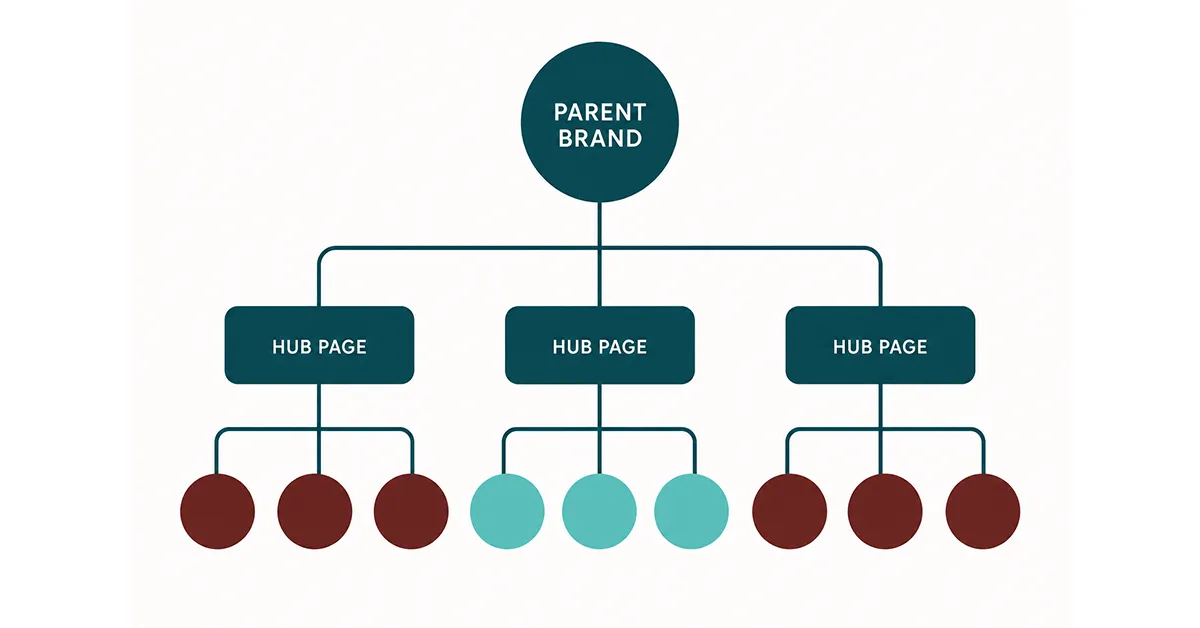
Brand architecture is the organizational system that determines how a company’s brands, products, services, and sub-brands relate to each other. It answers questions like whether a new product carries the parent company name, whether a new service line gets its own brand identity, and how much visual and verbal connection exists between different offerings under the same company umbrella.
When brand architecture is clear every launch decision, naming decision, and identity decision has a framework to reference. When it is absent every new product or service becomes its own improvised branding problem with no coherent relationship to what came before it.
Most small businesses never need to think about brand architecture because they have one brand and one core offering. The moment a business adds a second product line, a second service category, or acquires another company the architecture question becomes unavoidable. Getting it right before those decisions happen is significantly easier than untangling it afterward.
Why Brand Architecture Matters
Brand architecture is not a theoretical exercise. It has direct practical consequences for how customers perceive a business, how much a company spends on marketing, and how effectively new products and services get adopted.
Clarity for customers. A customer who understands the relationship between a company’s offerings can transfer trust and recognition from one product to another. A customer who cannot understand how the offerings relate to each other experiences confusion that erodes rather than builds confidence.
Efficiency in marketing. A well-defined brand architecture determines how much marketing investment gets spread across separate brand identities versus concentrated behind a single recognizable name. The difference is significant at every budget level.
Flexibility for growth. A brand architecture system that was designed with growth in mind accommodates new products, new services, and new markets without requiring a complete rebrand every time the business evolves.
Legal protection. Brand architecture decisions affect which names and marks get registered as trademarks, which brands need separate legal protection, and how much liability exposure exists across a portfolio of offerings.
The Four Main Brand Architecture Models
The Branded House
In a branded house model every product and service carries the master brand name. The parent brand is the dominant identity and sub-offerings are described as variants or extensions of that brand rather than independent entities.
Google is the canonical example. Gmail, Google Maps, Google Drive, Google Docs. Every product is Google something. The master brand does all the recognition work. New products launch with instant credibility because they inherit the Google name and everything associated with it.
The branded house model works when the master brand is strong enough to carry new offerings, when the products are closely related enough that a single identity makes sense across them, and when the company wants to concentrate marketing investment behind one recognizable name rather than spreading it across multiple brands.
The risk is that a problem with one product reflects on the entire brand. Google Plus failed publicly and that failure attached to the Google name in a way that a separate brand identity would have contained.
The House of Brands
In a house of brands model the parent company operates multiple independent brands that have little or no visible connection to each other. Each brand stands on its own with its own name, identity, positioning, and audience.
Procter and Gamble is the most widely cited example. Tide, Pampers, Gillette, Oral-B, and dozens of other brands are all owned by P&G but operate with entirely separate identities. Most consumers do not know or care about the P&G connection. Each brand is positioned and marketed to its specific audience without the parent company’s name getting in the way.
The house of brands model works when the company serves dramatically different audiences with different products, when the parent company brand would actually hurt rather than help individual product positioning, and when the company has the marketing budget to build and maintain multiple independent brand identities.
The risk is the cost. Building and sustaining multiple strong independent brands is expensive. Small and mid-sized businesses rarely have the resources to do it effectively.
The Endorsed Brand Model
In an endorsed brand model subsidiary brands maintain their own distinct identities but carry a visible endorsement from the parent company. The endorsement adds credibility without requiring the subsidiary to subordinate its identity entirely to the parent.
Marriott Hotels uses this model across its portfolio. Courtyard by Marriott, Westin by Marriott, Ritz-Carlton a Marriott company. Each brand serves a different traveler at a different price point with a different experience. The Marriott endorsement provides quality assurance without erasing the distinctions between them.
The endorsed model works when the parent brand has strong credibility to lend, when the subsidiary brands serve different enough audiences that separate identities are warranted, and when the relationship between parent and subsidiary is a selling point rather than a liability.
The Hybrid Model
Most real-world brand architectures are hybrids that combine elements of the models above. A company might run some products as branded house extensions, some as endorsed brands, and some as fully independent house of brands entries depending on the strategic needs of each product and audience.
Apple operates as a branded house for most of its products. iPhone, iPad, MacBook, Apple Watch. But Beats by Dre, which Apple acquired, was maintained as a separate independent brand rather than being rebranded as Apple Audio or Apple Beats. That decision reflected the reality that Beats had strong independent brand equity with a specific audience that the Apple name might not have served as well.
Hybrid models require the most management and the clearest governance rules because the logic of each sub-brand relationship needs to be explicitly defined and consistently applied.
When Brand Architecture Decisions Become Urgent
Most businesses do not think about brand architecture until a specific situation forces the question. A few common triggers.
Launching a second product or service line. Does it carry the parent brand name or get its own identity. If it gets its own identity how does it relate visually and verbally to the parent.
Acquiring another company. Does the acquired company keep its name. Does it get absorbed into the parent brand. Does it become an endorsed brand. Each choice has significant implications for customer loyalty, employee identity, and marketing investment.
Entering a new market or audience. The parent brand may have strong associations with an existing audience that would work against it in a new market. A separate brand identity may serve the new market better while protecting the existing brand’s positioning.
Experiencing brand confusion. When customers cannot articulate the relationship between a company’s offerings or when internal teams have different answers to the same branding question the architecture needs to be clarified.
Preparing for investment or acquisition. Investors and acquirers want to understand the brand portfolio clearly. A well-defined brand architecture signals that the business has been managed strategically rather than reactively.
Have a design project? Let's Chat about it!
Common Brand Architecture Mistakes
Building without a system. Every new product or service gets named and branded in isolation based on what seemed right at the time. The result is a portfolio of offerings with no coherent relationship to each other that costs more to market and confuses customers who encounter multiple touchpoints.
Choosing the wrong model for the stage. A small business with one core product does not need a house of brands architecture. A large company serving dramatically different audiences with different products probably should not run everything under a single master brand. The model needs to match the actual business situation not the most admired example.
Ignoring trademark implications. Brand architecture decisions affect which names get registered and protected. A naming system that creates confusion with existing trademarks or fails to protect key brand assets creates legal exposure that becomes expensive to resolve.
Letting the portfolio drift. Brand architecture established at one stage of growth often stops being applied consistently as the business evolves. New products get launched without reference to the established system and the architecture erodes over time into the same confusion it was designed to prevent.
Confusing brand architecture with visual identity. Brand architecture is a strategic organizational system. Visual identity is the design expression of that system. They are related but distinct. Defining the architecture first and then designing the visual system to express it produces more coherent results than starting with visual design and reverse-engineering a strategic rationale.
Brand Architecture in Practice at Graphicsbyte
Brand architecture questions come up most often when a client is launching a second offering, preparing for growth, or trying to make sense of a portfolio that has accumulated without a clear system. The work starts with understanding the business goals, the audience relationships, and the competitive context before any naming or visual decisions get made.
The architecture decision shapes everything that follows. The naming system, the visual identity hierarchy, the brand guidelines, and the marketing approach all flow from a clear understanding of how the brands in a portfolio relate to each other.
For businesses navigating these questions brand architecture is part of the Foundation and Strategy work at Graphicsbyte. It happens before logo design, before visual identity, and before any creative work begins.
Like what you read? Add Graphicsbyte as a preferred source to see more web design, branding, and illustration posts in your Google results.
What is brand architecture and why does it matter?
Brand architecture is the organizational system that defines how a company’s brands, products, services, and sub-brands relate to each other. It matters because it determines how customers understand and navigate a company’s offerings, how marketing investment gets allocated across a portfolio, and how well the brand system accommodates growth and change over time. Without a defined architecture every new product or service becomes an improvised branding decision with no coherent relationship to what came before.
What are the main types of brand architecture?
The four main brand architecture models are the branded house where every product carries the master brand name, the house of brands where independent brands operate without visible parent company connection, the endorsed brand model where sub-brands carry a visible parent company endorsement, and the hybrid model which combines elements of the other three depending on strategic need. Most real-world brand architectures are hybrids that reflect the specific history and strategy of the business.
When does a business need to think about brand architecture?
Brand architecture becomes urgent when a business launches a second product or service line, acquires another company, enters a new market or audience, experiences brand confusion among customers or internal teams, or prepares for investment or acquisition. Businesses with a single core offering rarely need to think about it until one of these situations arises.
What is the difference between a branded house and a house of brands?
In a branded house every product carries the master brand name and the parent brand does the recognition work across all offerings. Google is the standard example. In a house of brands each product or service operates under its own independent identity with little or no visible connection to the parent company. Procter and Gamble is the standard example. The right model depends on whether the parent brand adds or subtracts value from individual product positioning.
How does brand architecture relate to visual identity design?
Brand architecture is the strategic organizational system that defines how brands relate to each other. Visual identity is the design expression of that system. The architecture decision should come first because it determines what visual relationships need to be expressed. A parent brand and an endorsed sub-brand need a visual system that makes their relationship legible. Two house of brands entries need visual systems that are intentionally independent. Designing the visual identity before defining the architecture often produces work that needs to be revised when the strategic decisions get made.