Table of Contents
The Shelf Is a Sales Floor
Product packaging design does its job in silence. There is no pitch, no salesperson, no conversation. There is only the package and the split second a customer decides whether to pick it up or move on. That moment is entirely visual and entirely emotional. The brands that win it do so because someone made deliberate design decisions long before the product ever reached the shelf.
Good product packaging design communicates what a product is, who it is for, and why it is worth the price before a single word of copy is read. That is not a small thing. It is the difference between a product that moves and one that sits.
What Product Packaging Design Actually Does
Packaging is often discussed in terms of aesthetics. Color, typography, illustration, material finish. Those elements matter but they are in service of something more specific. Effective product packaging design performs several functions simultaneously.
It communicates brand identity. The packaging is an extension of the visual identity system. Color, logo placement, typography, and illustration style all need to be consistent with the broader brand so the product feels like it belongs to the same family as every other brand touchpoint.
It differentiates on the shelf. In a crowded retail environment every product is competing for attention at the same moment. Packaging design that stands out without feeling out of place in its category is a strategic achievement. It requires understanding the visual language of the category well enough to know which rules to follow and which ones to break.
It builds trust before purchase. A product in well designed packaging signals that the brand behind it cares about quality. Consumers make that judgment instantly and largely unconsciously. Cheap looking packaging undermines a quality product. Strong packaging elevates even a modest one.
It extends the brand experience. Unboxing has become a meaningful part of the customer experience for many product categories. The moment a customer opens a package is an opportunity to reinforce the brand relationship. Interior printing, tissue paper, inserts, and structural details all contribute to that experience.
The Elements of Effective Product Packaging Design
Strong packaging does not happen by accident. It is the result of coordinated decisions across multiple design disciplines working together.
Structure and Form:
The shape and structure of the packaging is the first decision and one that constrains everything that follows. A box, a bag, a bottle, a sleeve, a pouch, all have different surface areas, different production requirements, and different relationships with the product inside. The structure needs to protect the product, communicate its category, and provide the canvas the visual design requires.
Visual Identity Integration:
Product packaging design lives within the broader brand identity system. The color palette, typography, logo system, and illustration style established at the brand level all need to translate correctly to the packaging format. This is where a complete visual identity system pays off. Brands with documented guidelines can apply their identity to new packaging formats without starting from scratch.
Typography and Hierarchy:
Packaging typography has to work at multiple distances. A customer browsing a shelf sees the packaging from a meter away before they ever pick it up. The primary information needs to read at that distance. Secondary information becomes relevant once the product is in hand. Tertiary information like ingredients, instructions, and regulatory text exists at a different reading distance again. Managing that hierarchy clearly is one of the most technically demanding aspects of packaging design.
Color and Finish:
Color on packaging operates differently than color on screen or in print. Material finish, whether matte, gloss, soft touch, or foil, changes how color reads in different lighting conditions. A color that works perfectly in a digital mockup can behave unexpectedly on a printed substrate. Custom packaging design requires understanding how color and finish interact before production begins.
Illustration and Custom Graphics:
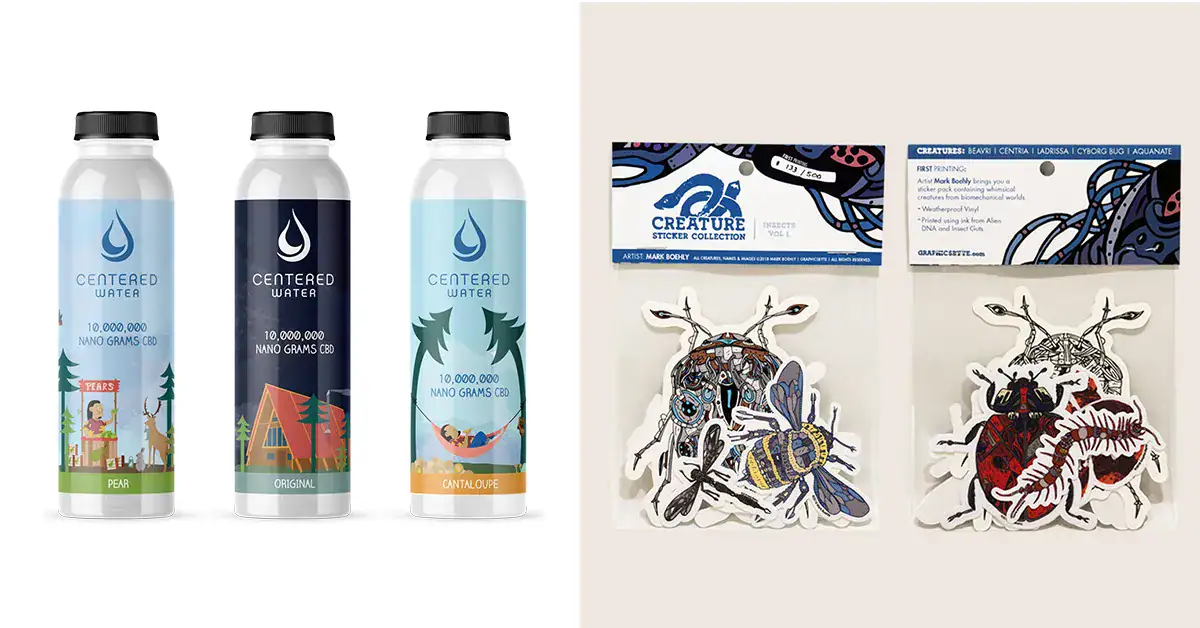
Custom illustration and graphics give product packaging a visual richness that photography and type alone cannot achieve. An illustrated mark, a pattern, or a custom graphic element adds personality and distinction that is difficult to replicate. For brands in competitive retail categories, custom illustration is often the element that makes the packaging feel genuinely unique rather than category-standard.
Graphicsbyte Exclusive
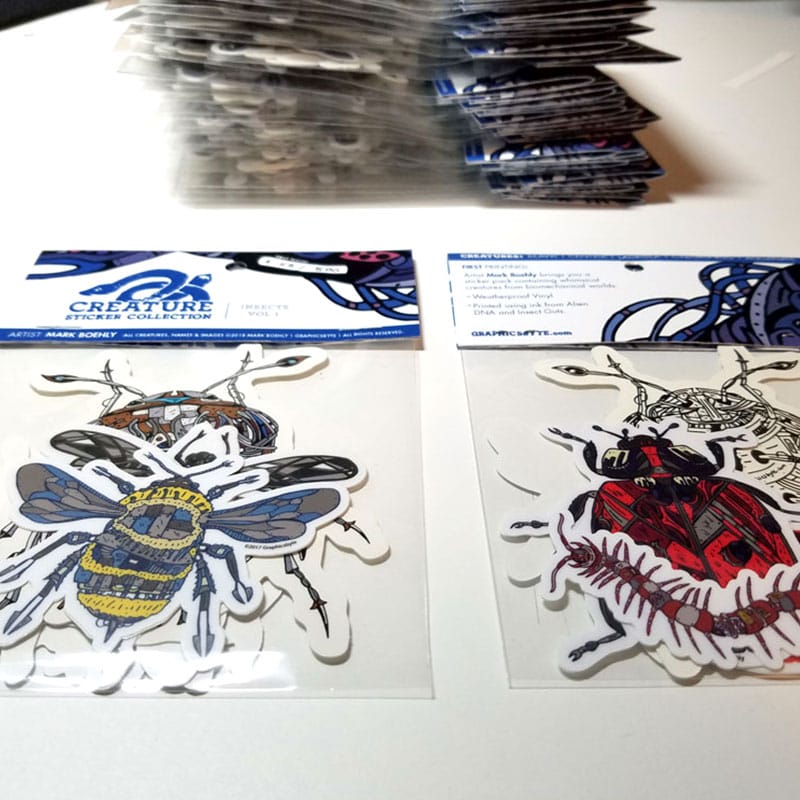
Creature Collection Sticker Packs
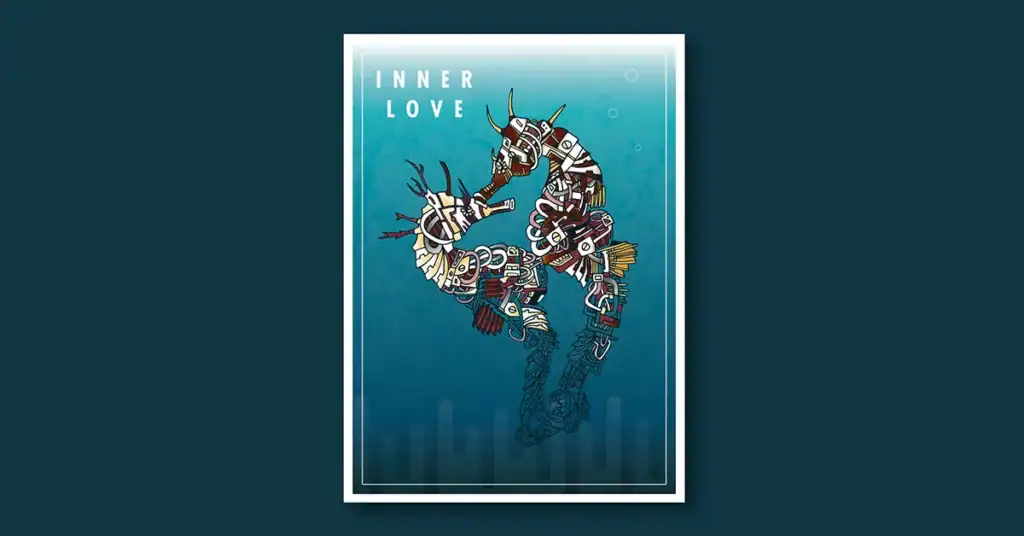
The Creature Collection is a Graphicsbyte original product line designed by Mark Boehly using his signature biomechanical illustration style. Each pack contains six stickers featuring insects, animals, and marine life rendered in the detailed science fiction influenced style that defines the series. Some packs include an easter egg download for a bonus print.
The packaging itself is part of the design. A repurposed original Graphicsbyte snake logo anchors the product line with a visual identity that feels cohesive across every release. It is a small example of what happens when illustration, brand thinking, and product design work together from the start.
Why Product Packaging Design Matters Beyond the Shelf
The shelf is the most obvious context for packaging design but it is not the only one. Product packaging travels. It appears in social media photography, in unboxing videos, in editorial features, and in the hands of customers who photograph their purchases. Every one of those moments is a brand impression.
Packaging that photographs well extends the marketing value of the original design investment. A product that looks as good in a social post as it does on a shelf is doing double duty. For food and beverage brands, cannabis brands, and specialty retail brands in particular, the social life of the packaging is often as important as its shelf performance.
The Relationship Between Packaging Design and Brand Trust
There is a measurable relationship between packaging quality and perceived product quality. Consumers consistently rate products in well designed packaging higher on quality metrics than identical products in generic packaging. The packaging is not just a container. It is a signal.
For brands entering competitive markets this signal matters enormously. A new product on a shelf full of established competitors needs every advantage it can get. Strong custom packaging design levels that playing field in the most immediate way possible. It communicates credibility before the customer has any other information to go on.
Generic system fonts in a logo signal that no real design decision was made. Custom or modified typography signals that someone thought carefully about how this brand communicates through every detail including the shape of its letters.
Type in a logo also needs to work at small sizes. A beautiful script font that becomes illegible at business card scale is the wrong choice regardless of how it looks at full size.
What to Expect From the Packaging Design Process
A thorough product packaging design process begins with understanding the product, the brand, and the retail environment the packaging will live in. Category research, competitive analysis, and brand guidelines review all inform the design direction before any visual work begins.
Structural decisions come next. Format, material, and production method need to be established early because they define the constraints the visual design has to work within.
Visual design development follows. Color, typography, illustration, and graphic elements are developed together rather than separately so the final design reads as a unified system rather than a collection of individual choices.
Dieline production and print preparation are the final technical stages before production. Getting these right requires understanding print production requirements, bleed and safe zones, color profiles, and the specific requirements of the production method being used.
The result of a well executed process is packaging that works in the real world, not just in a mockup.
A logo designed without strategic context is just decoration. A logo designed with that context is a business asset.
This is especially true for logo design for small business where the mark needs to carry a lot of weight. A small business does not have the marketing budget of a large corporation to make a mediocre logo familiar through sheer exposure. The logo has to do more work from day one.
Common Mistakes in Product Packaging Design
Following category conventions too closely produces packaging that blends in rather than standing out. Understanding the visual language of a category is necessary but the goal is differentiation within that language, not replication of it.
Designing for the mockup rather than the product is a common pitfall. A design that looks strong in a digital rendering can fall apart when the material, finish, and lighting of the actual production environment are factored in.
Neglecting the back and sides of the packaging is a missed opportunity. The front panel carries the primary design but the full package is experienced from multiple angles. A complete design considers every surface.
Treating packaging as separate from the brand identity creates inconsistency across touchpoints. Product packaging design works best when it is developed as part of the broader visual identity system rather than as a standalone project.
Final Thoughts
Product packaging design is one of the most direct expressions of a brand’s visual identity. It operates in the physical world, travels beyond the shelf, and makes a brand impression at the exact moment a purchase decision is being made.
For brands that sell physical products, packaging is not a secondary consideration. It is a primary brand asset that deserves the same strategic and creative investment as any other part of the identity system. The brands that treat it that way are the ones that stand out.
What is product packaging design?
Product packaging design is the process of creating the visual and structural design of a product’s packaging. It includes the form, color, typography, illustration, and brand identity elements that communicate what the product is and who it is for.
Why is packaging design important for a brand?
Packaging design communicates brand identity, builds trust before purchase, differentiates a product on the shelf, and extends the brand experience beyond the point of sale. It is often the first physical impression a customer has of a brand.
What makes good product packaging design?
Good packaging design integrates the brand identity system, communicates clearly at multiple distances, uses color and finish intentionally, and differentiates the product within its category without feeling out of place.
How does packaging design affect sales?
Consumers consistently rate products in well designed packaging higher on quality metrics than identical products in generic packaging. Strong packaging builds credibility and influences purchase decisions at the moment they happen.
What is the packaging design process?
The packaging design process typically includes product and brand research, structural decisions, visual design development, dieline production, and print preparation. A thorough process ensures the design works in the real world and not just in a mockup.